
From Conference Presentation to Peer-Reviewed Journal Article: How to Expand Your Research
Introduction
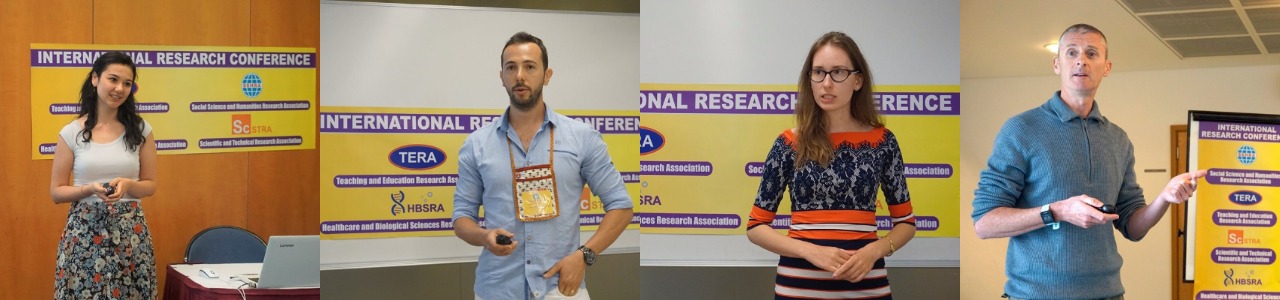
Presenting research at an academic conference is an important achievement for students, scholars, and researchers. It provides an opportunity to share findings, receive feedback from experts, discuss new ideas, and connect with academics working in similar fields. However, a conference presentation does not always represent the final stage of a research project.
For many researchers, the next important step is transforming their conference work into a full-length, peer-reviewed journal article.
Publishing research in an academic journal allows scholars to communicate their findings to a wider audience, contribute to existing knowledge, and establish their academic reputation. It also gives their work an opportunity to be evaluated by experts through the peer-review process.
However, turning a conference presentation into a journal article requires more than simply adding additional paragraphs to a presentation paper. Researchers must expand their arguments, strengthen their methodology, incorporate relevant literature, analyse their findings in greater depth, and follow the selected journal's publication guidelines.
In this article, we explain how to convert a conference presentation into a strong academic journal article, avoid common mistakes, and prepare your research for successful submission.
1. Understand the Difference Between a Conference Presentation and a Journal Article
Before expanding your research, it is important to understand how conference presentations and journal articles differ.
A conference presentation is generally designed to communicate the main ideas, methods, and findings of a research project within a limited amount of time. Researchers usually focus on the most important information because presentation sessions have specific time restrictions.
A peer-reviewed journal article, on the other hand, requires a more detailed and structured discussion. It must demonstrate the research problem, explain the methodology, present evidence, analyse results, and establish how the findings contribute to existing academic knowledge.
Key differences:
| Conference Presentation | Peer-Reviewed Journal Article |
|---|---|
| Short and focused communication | Detailed academic discussion |
| Limited presentation time | Comprehensive written analysis |
| Summarises important findings | Explains methods and findings in depth |
| Encourages discussion and feedback | Undergoes formal peer review |
| Usually uses slides or a short paper | Follows a journal-specific manuscript format |
A conference presentation can therefore serve as the foundation for a journal article, but the published manuscript should offer sufficient depth and scholarly contribution.
2. Review and Evaluate Your Conference Research
The first step in expanding your research is to review the material you presented at the conference.
Go through your presentation slides, research paper, abstract, notes, and any feedback received from conference participants.
Ask yourself the following questions:
-
What was the main research problem?
-
What were the most important findings?
-
Were there any limitations in the original study?
-
Did participants raise questions that deserve further investigation?
-
Can the research be expanded with additional evidence or analysis?
-
Does the study offer a meaningful contribution to existing literature?
This evaluation helps identify areas that need improvement.
For example, suppose you presented a conference paper on the impact of social media on university students' academic performance.
During the conference, participants suggested examining differences between undergraduate and postgraduate students.
You could use this feedback to strengthen your research by expanding the analysis, including additional comparisons, or explaining the limitations of the original study.
The objective is to develop a stronger research contribution rather than simply reproduce the original presentation.
3. Expand Your Literature Review
A strong literature review is one of the most important components of a peer-reviewed journal article.
Conference presentations often include only a limited discussion of previous research because of time and word restrictions. A journal article generally requires a more comprehensive examination of relevant academic studies.
Start by identifying important publications related to your research topic.
You should:
-
Search for recent peer-reviewed journal articles.
-
Identify influential studies and established theories.
-
Compare findings from different researchers.
-
Identify disagreements, research gaps, and unanswered questions.
-
Explain how your study addresses an existing gap.
Academic databases and research platforms such as Google Scholar, PubMed, and JSTOR can help researchers discover relevant academic literature.
For example, if your research examines digital learning in higher education, you may need to review studies on online education, student engagement, educational technology, and academic performance.
Do not include references simply to increase the number of citations. Every source should contribute to your research argument.
4. Strengthen Your Research Methodology
Your research methodology explains how the study was conducted and why particular methods were selected.
A conference presentation may briefly describe the research design, participants, data collection, and analysis. However, a journal article should provide enough detail for readers and reviewers to understand and evaluate the research process.
Depending on your research topic, consider expanding the following areas:
Research Design
Explain whether your study uses qualitative, quantitative, or mixed-methods research.
Data Collection
Describe how the information was collected. This may include surveys, interviews, questionnaires, observations, experiments, or secondary datasets.
Sample Selection
Explain how participants, institutions, documents, or datasets were selected.
Data Analysis
Describe the analytical methods and tools used to interpret the collected information.
Ethical Considerations
Discuss informed consent, confidentiality, participant privacy, and relevant ethical approvals where applicable.
For example, if your conference presentation examined student satisfaction through a survey of 50 university students, you might expand the study by explaining the sampling approach, questionnaire design, limitations, and statistical analysis.
Only add new data or methods when they have genuinely been used and appropriately documented. Never invent research findings or modify results simply to make a paper appear stronger.
5. Incorporate Conference Feedback into Your Article
One major advantage of presenting research at a conference is receiving feedback from other academics.
Conference participants may identify weaknesses in your argument, suggest additional references, question your research methods, or recommend new directions for investigation.
This feedback can help improve your journal manuscript.
However, not every suggestion needs to be included. Evaluate comments carefully and determine whether they improve the accuracy, clarity, or academic value of your research.
A practical approach is to create a feedback document with three sections:
-
Research strengths: What did participants find useful or interesting?
-
Areas for improvement: Which parts of the research need clarification or further analysis?
-
New research directions: What additional questions could be explored?
This process helps turn conference discussions into meaningful improvements.
6. Choose the Right Academic Journal
Selecting an appropriate journal is an important part of the publication process.
A well-written research paper may still be rejected if it does not match the journal's subject area, audience, or publication requirements.
Before submitting your manuscript, research potential journals carefully.
Consider the following factors:
Journal Scope
Check whether the journal publishes research related to your topic and academic discipline.
Target Audience
Consider whether the journal reaches the researchers, academics, and professionals who would benefit from your findings.
Publication Guidelines
Review manuscript length, formatting, reference style, figure requirements, and submission procedures.
Peer-Review Process
Understand whether the journal follows single-blind, double-blind, or another review process.
Publication Ethics
Check the journal's editorial policies, peer-review transparency, authorship requirements, and publication ethics.
Researchers should also verify journal indexing and publication claims directly through trusted sources. Avoid journals that promise guaranteed acceptance or unusually fast publication without a credible review process.
Useful resources include the Directory of Open Access Journals (DOAJ) and Think. Check. Submit.
7. Follow a Clear Academic Journal Article Structure
Most academic journals require manuscripts to follow a recognised structure, although exact requirements vary.
A common research article structure includes the following sections:
| Section | Purpose |
|---|---|
| Title | Clearly communicates the research topic |
| Abstract | Summarises the study, methods, findings, and contribution |
| Keywords | Helps readers and databases identify the topic |
| Introduction | Explains the research problem and objectives |
| Literature Review | Discusses relevant existing research |
| Methodology | Explains the research design and methods |
| Results | Presents the main findings |
| Discussion | Interprets the findings and their significance |
| Conclusion | Summarises contributions and limitations |
| References | Lists the sources used in the article |
Some journals combine the literature review with the introduction or use different structures for theoretical, review, and qualitative studies.
Always follow the journal's official author guidelines.
8. Improve Your Abstract and Research Title
Your title and abstract are often the first parts of your article that editors and readers examine.
A clear title should communicate the central research topic without being unnecessarily long or complicated.
Your abstract should briefly explain:
-
The research background or problem.
-
The main objective of the study.
-
The research methodology.
-
The most important findings.
-
The contribution or significance of the research.
For example, a conference presentation titled "Social Media and Students" could be developed into a more specific journal title:
"The Influence of Social Media Use on Academic Performance Among University Students: A Study of Learning Behaviour and Digital Engagement."
The revised title communicates a clearer research focus.
Avoid including claims in the abstract that are not supported by your actual findings.
9. Avoid Duplicate Publication and Follow Research Ethics
One of the most important considerations when expanding conference research is publication ethics.
Researchers must understand that presenting a paper at a conference and publishing a journal article are not automatically the same activity. However, some conference proceedings publish full papers, and these may affect whether a journal considers a later version.
Before submitting your manuscript, check:
-
Whether the conference published your full paper in its proceedings.
-
Whether the conference or publisher has copyright restrictions.
-
Whether the target journal accepts expanded versions of conference papers.
-
Whether the journal requires disclosure of earlier conference presentation or publication.
-
Whether the new manuscript provides sufficient original contribution.
If your work has already appeared in conference proceedings, disclose this information to the journal editor and follow the journal's policies.
Do not submit the same manuscript to multiple journals simultaneously unless the journals' policies explicitly permit it. Avoid plagiarism, duplicate publication, and undisclosed reuse of previously published material.
Properly acknowledge collaborators, funding sources, and earlier versions of your research.
10. Prepare for Peer Review and Revise Your Manuscript
After submission, your article may go through an editorial screening process before being sent to reviewers.
Reviewers evaluate the quality, originality, methodology, relevance, and academic contribution of the manuscript.
Possible decisions include:
-
Accept: The manuscript is accepted for publication.
-
Minor revisions: Small changes are required.
-
Major revisions: Significant improvements or additional explanations are needed.
-
Reject: The journal decides not to publish the manuscript.
Receiving revision requests is a normal part of academic publishing.
When reviewers provide comments, read each point carefully and prepare a structured response.
For every comment:
-
Identify the issue raised by the reviewer.
-
Explain how you addressed it.
-
Mention the relevant changes in the revised manuscript.
-
Provide a clear explanation if you disagree with a suggestion, supported by academic reasoning.
Professional and respectful responses can make the revision process more effective.
11. How Academic Conferences Support Journal Publication
Academic conferences can play an important role in helping researchers develop their work into publishable articles.
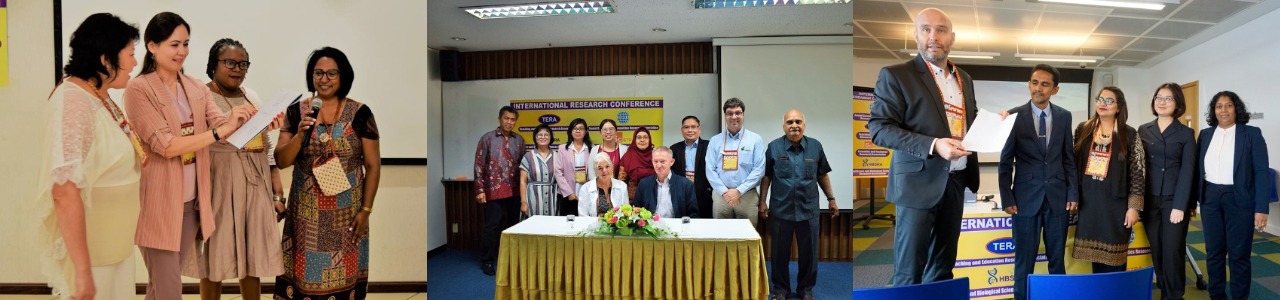
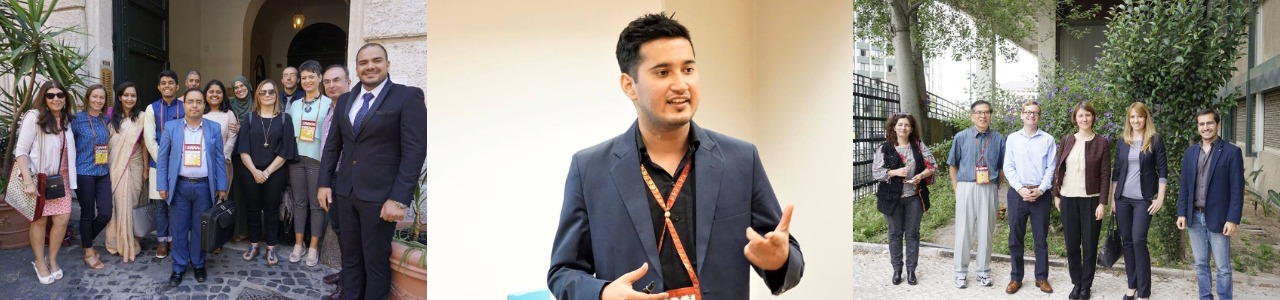
They provide opportunities to present early research findings, receive expert feedback, discover relevant literature, and connect with potential research collaborators.
For early-career researchers, conferences can also improve academic communication skills and provide exposure to different research approaches.
Platforms such as SocialScienceForum.org help researchers explore academic conference opportunities, engage with scholarly communities, and share their research interests.
Researchers can explore relevant international conferences, review conference proceedings, and participate in academic discussions that may help them identify opportunities to develop their research further.
Conclusion
Transforming a conference presentation into a peer-reviewed journal article is an important step in academic research. It allows researchers to develop their ideas, strengthen their methodology, incorporate valuable feedback, and contribute more substantially to their academic fields.
However, successful publication requires more than expanding the original presentation. Researchers must improve their literature review, provide detailed methodological explanations, present reliable findings, select an appropriate journal, and follow publication ethics.
For students and early-career academics, the process can seem challenging, but it also provides an excellent opportunity to develop research and academic writing skills.
By approaching each stage carefully, researchers can turn a conference presentation into a meaningful scholarly contribution that reaches a wider academic audience.
Academic conferences are not simply places to present completed research. They can also be starting points for stronger research questions, new collaborations, and future journal publications.
Frequently Asked Questions (FAQs)
1. Can I publish a conference presentation as a journal article?
Yes. Many journals consider expanded versions of conference presentations or papers. However, the manuscript must meet the journal's originality requirements, and any previous publication in conference proceedings must be disclosed.
2. How much should I expand a conference paper for journal publication?
There is no universal percentage. The journal article should provide a substantial scholarly contribution, with appropriate development of the literature review, methodology, analysis, and discussion. Follow the target journal's requirements.
3. Do I need to collect new data before submitting my conference paper to a journal?
Not always. Some studies can be expanded through deeper analysis, stronger theoretical discussion, or additional literature. However, new data may be necessary if the original research does not adequately address the journal article's objectives.
4. Can I submit the same paper to multiple journals?
No. Simultaneous submission of the same manuscript to multiple journals is generally prohibited. Researchers should wait for a final decision or formally withdraw the manuscript before submitting it elsewhere.
5. What is the role of peer review in academic publishing?
Peer review allows independent experts to evaluate a manuscript's originality, research methods, findings, and academic contribution. Their feedback helps editors make publication decisions and can improve the quality of research.
6. How can academic conferences help researchers publish journal articles?
Conferences provide opportunities to receive feedback, discover new research perspectives, connect with academics, and identify potential collaborations. These experiences can help researchers improve their manuscripts before journal submission.
