


From Theory to Practice: How Social Science Research Influences Public Policy
Introduction
Public policies shape almost every aspect of our daily lives, from education and healthcare to employment, economic development, housing, and environmental protection. Governments make decisions about these areas to address social challenges and improve the well-being of communities. However, effective policymaking requires more than opinions, assumptions, or political priorities. It requires a clear understanding of people's needs, social conditions, and the possible consequences of different decisions.
This is where social science research and public policy come together. Social science research helps policymakers understand complex social problems, evaluate existing programmes, identify inequalities, and develop solutions based on evidence.
By studying human behaviour, institutions, communities, and economic systems, researchers provide valuable insights that can guide public decisions. This article explores how social science research influences public policy, the methods researchers use, real-world applications, and why collaboration between researchers and policymakers is important.
1. Understanding the Connection Between Social Science Research and Public Policy
Social science research examines how individuals, groups, communities, and institutions interact. It covers disciplines such as sociology, economics, political science, psychology, education, anthropology, and public administration.
Public policy refers to the decisions, laws, regulations, and programmes developed by governments to address public issues. These decisions affect how resources are distributed, which services are provided, and how social challenges are managed.
The connection between the two is straightforward: social science research provides evidence and insights that can help policymakers make better-informed decisions.
For example:
- Education: Research can identify why students leave school early and which teaching approaches improve learning outcomes.
- Healthcare: Studies can examine barriers to accessing medical services and the factors influencing public health behaviour.
- Employment: Economic and sociological research can explore unemployment, workplace inequality, and changing labour market requirements.
- Poverty: Researchers can investigate the causes of poverty and evaluate whether social welfare programmes reach the people who need them.
- Public safety: Research can help explain patterns of crime and assess the effectiveness of prevention programmes.
These examples demonstrate that social science research is not limited to academic discussions. It can contribute to practical decisions that affect society.
2. Why Evidence-Based Policymaking Matters
Policymakers often work under pressure to respond quickly to public concerns. However, decisions based only on assumptions or incomplete information may fail to address the actual causes of a problem.
Evidence-based policymaking uses reliable research, data, and evaluation to inform public decisions. It does not mean that research alone determines policy. Political priorities, public values, available resources, and practical limitations also matter.
Research can strengthen policymaking in several ways.
Identifying the Root Causes of Social Problems
A visible social problem may have several underlying causes. Research helps policymakers look beyond the symptoms and understand the factors contributing to an issue.
For instance, low school attendance may not simply reflect a lack of student interest. It could be associated with household income, transportation difficulties, school infrastructure, disability access, or family responsibilities.
Understanding these factors helps governments develop more appropriate interventions.
Improving the Use of Public Resources
Governments operate with limited budgets and must decide how to distribute resources across different sectors.
Research can help identify which programmes are effective, which communities require additional support, and where public spending may have limited impact.
Reducing Social Inequalities
Research can reveal differences in access to education, employment, healthcare, housing, and other essential services.
By identifying these inequalities, policymakers can design programmes that respond to the needs of underserved communities.
Evaluating Policy Outcomes
Introducing a policy is only one part of the process. Governments also need to understand whether it is achieving its intended objectives.
Research provides methods for assessing programme performance, identifying unexpected consequences, and recommending improvements.
3. How Social Science Researchers Influence Public Policy
Social science researchers contribute to policymaking in different ways. Their work may influence the early identification of a problem, the development of policy alternatives, or the evaluation of an existing government programme.
The following approaches illustrate how research findings can become useful policy recommendations.
A. Conducting Surveys and Collecting Public Opinions
Surveys help researchers understand people's experiences, attitudes, needs, and concerns.
For example, a researcher studying access to public healthcare might survey residents in rural and urban communities. The findings could reveal differences in travel time, affordability, awareness of services, and availability of medical professionals.
Policymakers can use these findings to identify service gaps and consider improvements.
B. Using Interviews and Case Studies
Interviews provide detailed information about people's experiences that may not appear in numerical datasets.
For example, interviews with teachers, parents, and students can help researchers understand why a government education programme is not producing the expected results.
Case studies can also demonstrate how a particular policy works in a specific community and what lessons might be relevant elsewhere.
C. Analysing Economic and Social Data
Quantitative research helps identify patterns and relationships across large populations.
Researchers may analyse employment rates, income levels, household expenditure, educational participation, health outcomes, or demographic trends.
Such analysis can help policymakers understand the scale of a problem and identify groups that require targeted support.
D. Publishing Research Papers and Policy Reports
Academic publications, research reports, policy briefs, and conference presentations provide channels through which research findings reach decision-makers.
A policy brief is particularly useful because it presents a research problem, key findings, and practical recommendations in a concise format.
Researchers who communicate their findings clearly can make academic knowledge more accessible to government departments, NGOs, institutions, and community organisations.
4. Real-World Areas Where Social Science Research Shapes Public Policy
Social science research influences several important areas of public life. Its contribution becomes especially clear when research findings are applied to specific policy challenges.
A. Education Policy and Learning Outcomes
Education research helps governments understand how students learn, which teaching approaches are effective, and what barriers prevent children from accessing quality education.
For example, research into school attendance may reveal that students in certain communities face transportation problems, financial difficulties, or a lack of suitable learning facilities.
Policymakers can use this evidence to consider:
- Improving school infrastructure and accessibility.
- Providing financial assistance to disadvantaged students.
- Supporting teacher training and professional development.
- Developing inclusive education programmes.
- Strengthening vocational and skills-based education.
Research can also help evaluate whether education reforms are improving student participation and learning outcomes.
B. Healthcare Policy and Public Health
Healthcare policy requires an understanding of medical needs as well as social and economic conditions.
Social science research can examine why some communities have lower access to healthcare, why people may hesitate to use particular services, and how income, education, culture, and geography influence health behaviour.
For example, research into vaccination awareness may identify differences in public knowledge and trust across communities. Health authorities can use these findings to develop more effective communication and outreach programmes.
C. Economic Development and Employment
Economic and social research helps governments understand employment trends, income inequality, labour market changes, and the challenges faced by different groups.
Research may identify skill shortages in particular industries or reveal why young people struggle to enter the workforce.
Such findings can inform policies related to:
- Skill development and vocational training.
- Employment generation programmes.
- Support for small businesses.
- Labour protections and workplace conditions.
- Financial inclusion and poverty reduction.
D. Gender Equality and Social Inclusion
Research into gender inequality and social exclusion helps policymakers understand how social structures, cultural expectations, and institutional practices affect people's opportunities.
For example, studies may examine differences in wages, access to education, workplace participation, or representation in leadership positions.
The findings can support policies that promote equal opportunities, safer workplaces, accessible education, and greater participation in public life.
E. Environmental and Urban Development
Environmental challenges are not only scientific or technological issues. They also involve human behaviour, economic activity, community needs, and public decision-making.
Social scientists can study how urban expansion affects local communities, how people respond to environmental regulations, and why certain groups face greater risks from pollution or climate-related events.
This research can inform urban planning, public transportation, waste management, housing, and environmental awareness programmes.
5. Research Methods That Help Policymakers Make Better Decisions
Choosing the right research method is essential when studying a public policy issue. Different methods provide different types of evidence, and researchers must select an approach that matches their research questions.
Three broad approaches are particularly useful.
Qualitative Research
Qualitative research explores experiences, opinions, attitudes, and social processes in depth.
Common methods include:
- Interviews with community members and policymakers.
- Focus group discussions.
- Observation of social behaviour.
- Case studies of government programmes.
- Analysis of public documents and institutional records.
For example, researchers evaluating a rural development programme might interview residents to understand whether the programme addresses their actual needs.
Quantitative Research
Quantitative research uses numerical data and statistical analysis to identify patterns, measure outcomes, and examine relationships between variables.
Common methods include:
- Surveys with structured questions.
- Statistical analysis of government datasets.
- Employment and income analysis.
- Population and demographic studies.
- Before-and-after programme evaluations.
For example, researchers may compare school attendance rates before and after the introduction of a new education initiative.
Mixed-Methods Research
Mixed-methods research combines qualitative and quantitative approaches to develop a more complete understanding of a research problem.
Consider a government programme designed to improve employment opportunities for young people. Researchers could analyse employment statistics to measure outcomes and conduct interviews to understand participants' experiences.
Combining both approaches can help explain not only whether a programme is working, but also why it produces particular results.
6. The Role of Academic Conferences in Connecting Research with Policymakers
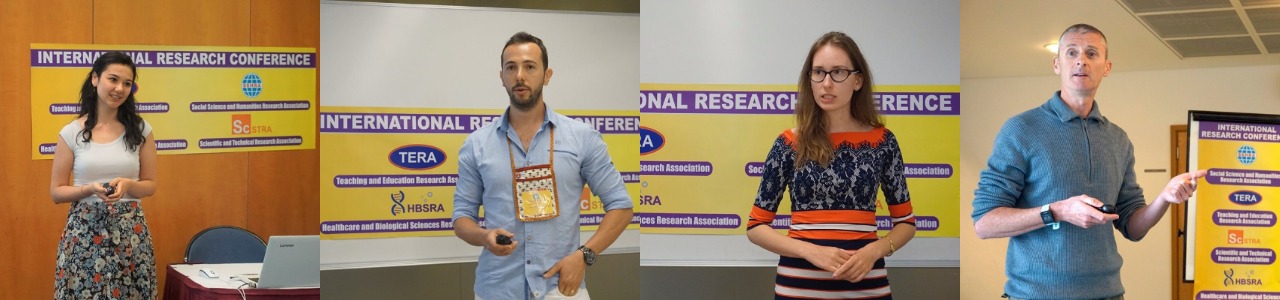
Academic conferences create opportunities for researchers to present their findings, exchange ideas, and discuss issues that affect society.
They can also help bridge the gap between academic research and practical policymaking by bringing together people from different professional backgrounds.
For social science researchers, conferences offer several important opportunities.
Sharing Research Findings
Presenting research at an academic conference allows scholars to communicate their findings to a wider audience.
Researchers can explain their methodology, discuss their conclusions, and receive feedback from other academics and professionals.
Building Interdisciplinary Connections
Public policy challenges often involve multiple disciplines.
For example, urban development may require insights from economics, sociology, political science, environmental studies, and public administration.
Conferences encourage researchers from different fields to exchange knowledge and explore interdisciplinary approaches.
Developing Research Collaborations
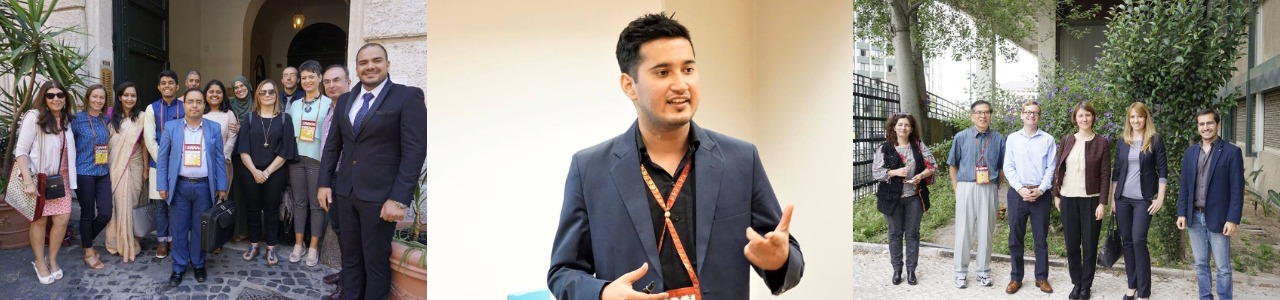
Academic events can help researchers connect with universities, research institutions, NGOs, and policy professionals.
These connections may lead to joint studies, collaborative publications, comparative research, and opportunities to examine policy challenges across different countries.
Discussing Emerging Social Challenges
Conferences provide a platform for discussing new research questions and emerging developments.
Topics such as artificial intelligence and employment, digital education, migration, economic inequality, and sustainable development can benefit from interdisciplinary discussion.
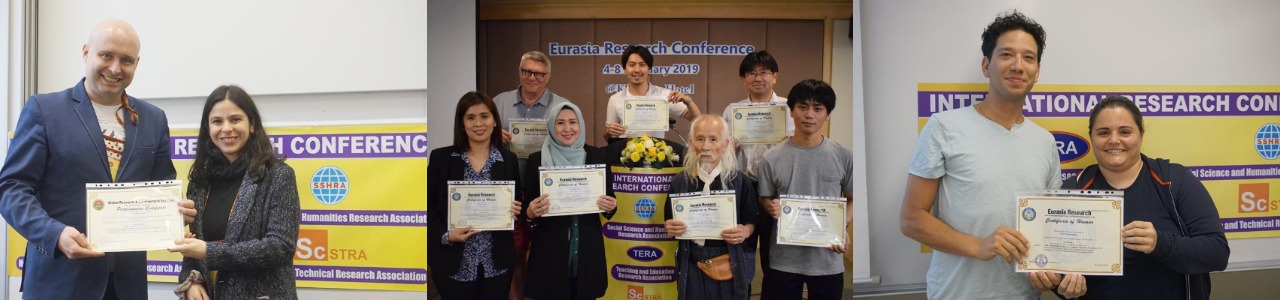
For researchers interested in sharing their work, international academic conferences can provide a valuable platform for presenting findings and engaging with the wider research community.
7. Challenges in Translating Research into Public Policy
Although research can contribute significantly to policymaking, academic findings do not automatically become government decisions.
Several challenges can affect the process.
Limited Communication Between Researchers and Policymakers
Academic research often uses technical language and detailed theoretical explanations. Policymakers, however, may need concise findings and practical recommendations.
Researchers can address this gap by preparing policy briefs, executive summaries, and accessible presentations.
Political and Institutional Priorities
Policy decisions are influenced by political commitments, public expectations, institutional responsibilities, and available resources.
Even strong research evidence may not lead to immediate policy changes if it conflicts with existing priorities or faces institutional resistance.
Limited Research Funding and Data Availability
Some social issues are difficult to study because reliable data is unavailable or research funding is limited.
This can make it challenging to conduct large-scale studies, follow long-term outcomes, or compare conditions across regions.
Differences Between Research Findings and Local Conditions
A policy that produces positive results in one community may not work in another.
Social, cultural, economic, and institutional differences can influence outcomes. Policymakers should therefore consider local evidence before applying findings from other regions.
Ethical Considerations
Social science research often involves people, communities, and sensitive information.
Researchers must protect participants' privacy, obtain informed consent, avoid harmful practices, and represent findings accurately. Ethical research is essential for building public trust.
8. How Researchers Can Make Their Work More Relevant to Public Policy
Researchers who want their work to influence public decisions should think about practical applications from the beginning of a project.
The following practices can help make research more accessible and useful.
- Choose relevant research questions: Focus on issues that address real social, economic, educational, or institutional challenges.
- Understand the policy environment: Study existing laws, government programmes, institutional responsibilities, and policy priorities related to the topic.
- Use reliable research methods: Select appropriate qualitative, quantitative, or mixed-methods approaches.
- Present clear findings: Explain the results in straightforward language and distinguish evidence from interpretation.
- Provide practical recommendations: Suggest realistic actions supported by the research findings.
- Engage with stakeholders: Communicate with policymakers, educators, community organisations, and other relevant professionals.
- Share findings through multiple channels: Publish research papers, prepare policy briefs, attend academic conferences, and participate in professional discussions.
These practices can help researchers connect academic knowledge with real-world challenges without compromising research quality or independence.
9. The Role of Social Science Research in the Future of Public Policy
Public policy challenges are becoming increasingly interconnected. Digital transformation, population changes, economic uncertainty, climate change, migration, and changing employment patterns are creating new questions for governments and institutions.
Social science research will remain important in understanding how these developments affect individuals and communities.
Some emerging areas where research may contribute include:
- Artificial intelligence and employment: Understanding how automation and AI affect jobs, skills, income, and workplace conditions.
- Digital education: Examining access to technology, online learning experiences, and differences in digital skills.
- Climate and social inequality: Studying how environmental changes affect vulnerable communities and economic opportunities.
- Migration and urbanisation: Understanding population movement, housing requirements, employment, and social integration.
- Digital governance: Exploring public trust, online participation, data privacy, and access to government services.
As these issues evolve, policymakers will need reliable evidence and perspectives from multiple disciplines. Researchers can contribute by producing relevant studies, communicating findings clearly, and engaging with communities and institutions.
10. How Social Science and Humanities Research Association (SSHRA) Supports Academic Exchange
Academic progress depends on the ability of researchers to share knowledge, discuss new ideas, and build meaningful connections across disciplines and geographical boundaries.
The Social Science and Humanities Research Association (SSHRA), through SocialScienceForum.org, provides an academic platform focused on social science and humanities research.
For researchers interested in connecting academic work with wider social discussions, participation in research activities and academic events can offer opportunities to:
- Present research findings and exchange academic perspectives.
- Connect with researchers from different disciplines.
- Explore emerging issues in social sciences and humanities.
- Develop academic networking and collaboration opportunities.
- Share research through conference-related academic platforms.
By encouraging academic exchange and multidisciplinary discussions, research communities can contribute to a stronger connection between scholarly work and the issues affecting society.
Researchers interested in participating can explore the academic conference, membership, keynote, and research-related opportunities available through SocialScienceForum.org.
Conclusion
Social science research plays an important role in helping governments understand social challenges and develop informed public policies. By examining human behaviour, economic conditions, institutional systems, and community experiences, researchers provide evidence that can improve education, healthcare, employment, social inclusion, and environmental planning.
However, research influences policy most effectively when findings are communicated clearly, recommendations are practical, and researchers engage with policymakers and communities.
The connection between theory and practice is essential for building policies that respond to real social needs. Through academic conferences, interdisciplinary research, and international collaboration, researchers can continue contributing valuable knowledge to public discussions and policy development.
Frequently Asked Questions (FAQs)
1. What is the relationship between social science research and public policy?
Social science research provides evidence about human behaviour, social conditions, economic systems, and institutional challenges. Policymakers can use these findings to understand public problems, develop programmes, and evaluate existing policies.
2. Why is social science research important for policymaking?
It helps policymakers understand the causes of social problems, identify inequalities, assess public needs, and make decisions based on reliable evidence rather than assumptions alone.
3. What are some examples of social science research influencing public policy?
Examples include research on school attendance influencing education programmes, employment studies informing skill development initiatives, and healthcare access research supporting public health outreach.
4. Which social science disciplines contribute to public policy?
Economics, sociology, political science, psychology, anthropology, education, and public administration all contribute valuable perspectives to policy research and development.
5. How do researchers communicate their findings to policymakers?
Researchers can communicate through policy briefs, academic publications, research reports, conferences, presentations, consultations, and direct engagement with government departments and other stakeholders.
6. What research methods are used in public policy studies?
Common approaches include qualitative methods such as interviews and case studies, quantitative methods such as surveys and statistical analysis, and mixed-methods research combining both.
7. Can academic conferences help influence public policy?
Yes. Conferences allow researchers to present findings, receive feedback, develop professional connections, and exchange ideas with academics and other professionals. These interactions can support discussions about policy challenges and possible solutions.
8. How can early-career researchers contribute to public policy?
Early-career researchers can study relevant social issues, use appropriate research methods, publish their findings, participate in academic conferences, and communicate practical recommendations to relevant organisations and policymakers.
