


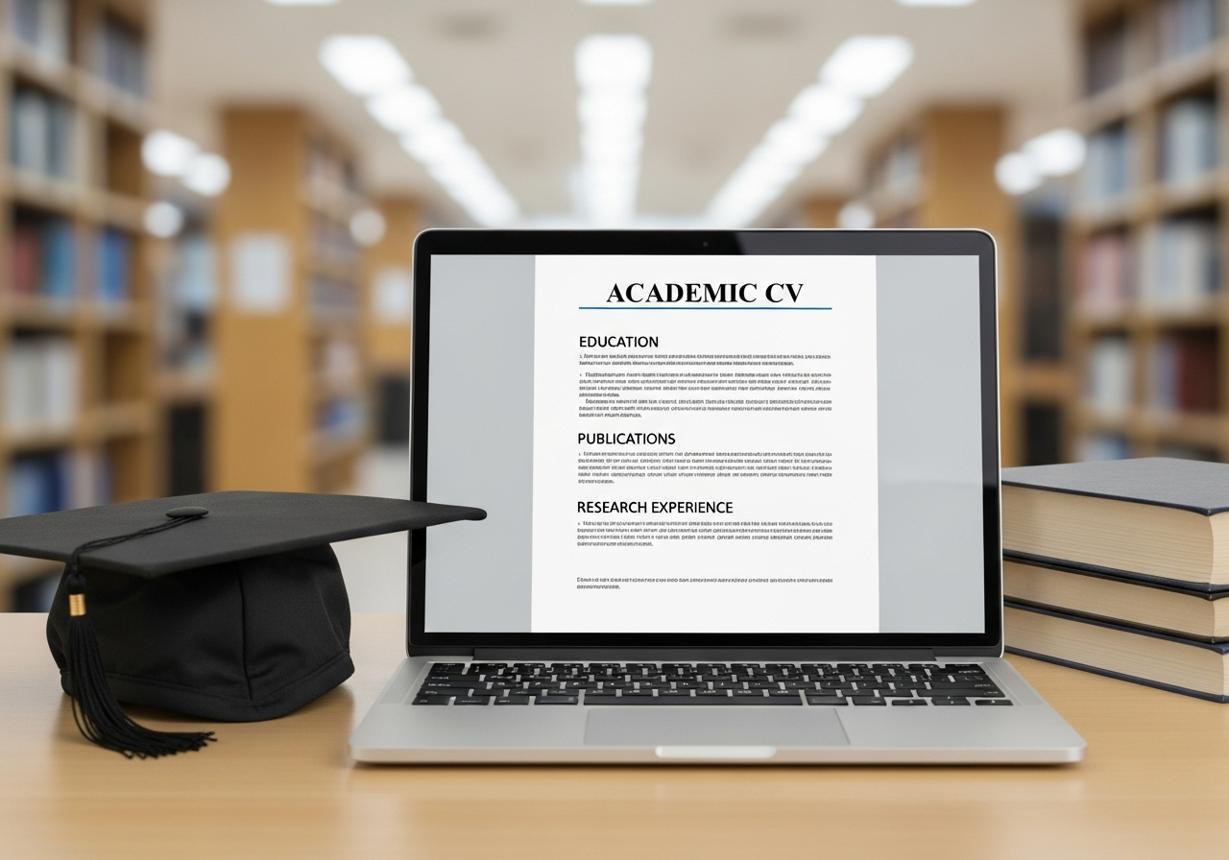
Building a Standout Academic CV: What International Reviewers Look For
Introduction
An academic CV is more than a document listing educational qualifications and professional experience. It is a detailed presentation of a researcher's academic journey, achievements, research interests, publications, and contributions to the academic community.
Whether you are applying for an international research opportunity, an academic position, a scholarship, a fellowship, or a conference presentation, your academic CV can influence how reviewers understand your experience and potential.
International reviewers often receive applications from researchers with different educational backgrounds, research experiences, and academic achievements. They need a clear and organised document that helps them evaluate each candidate's qualifications, research contributions, and suitability for an opportunity.
For early-career researchers, preparing an academic CV can feel challenging, particularly when they have limited publications or conference experience. However, a strong CV does not depend only on the number of achievements. It also depends on how effectively you present your academic background, skills, and potential.
In this article, we will explore how to create a professional academic CV, what international reviewers generally look for, which sections to include, and how to avoid common mistakes.
1. What Is an Academic CV and Why Is It Important?
An academic Curriculum Vitae (CV) is a comprehensive document that presents an individual's educational background, research experience, academic achievements, publications, teaching experience, and professional contributions.
Unlike a standard professional résumé, which usually focuses on employment history and job-related skills, an academic CV highlights scholarly activities and research-related accomplishments.
Researchers commonly use academic CVs when applying for:
- International academic conferences.
- Research scholarships and grants.
- University teaching and research positions.
- Postgraduate and doctoral programmes.
- Research fellowships and internships.
- Academic collaborations and visiting researcher opportunities.
- Journal editorial and peer-review opportunities.
A well-structured academic CV helps reviewers understand your academic profile without having to search through multiple documents.
It also demonstrates your ability to organise information, communicate professionally, and present your achievements accurately.
2. What International Reviewers Look for in an Academic CV
International reviewers may evaluate candidates differently depending on the opportunity. A scholarship committee may focus on academic performance and research potential, while a university recruitment panel may place greater emphasis on teaching experience, publications, and subject expertise.
However, several qualities are commonly valued across academic applications.
A. Strong Academic Background
Your educational qualifications provide the foundation of your academic profile.
Reviewers generally look for relevant degrees, academic performance, specialised training, and the relationship between your education and research interests.
Include:
- Degree or qualification name.
- University or educational institution.
- Graduation or completion year.
- Relevant academic achievements.
- Thesis or dissertation title, where applicable.
For example:
Master of Arts in Sociology
University Name | 2024
Research focus: Social inequality and community development.
If your academic performance is particularly strong or relevant to the opportunity, you may also include your grade, GPA, or academic distinction.
B. Research Experience and Academic Interests
Research experience is an important part of an academic CV, particularly when applying for research opportunities.
Reviewers want to understand what topics you have explored, which research methods you have used, and what contributions you have made.
You can include:
- Undergraduate or postgraduate research projects.
- Dissertation and thesis work.
- Independent research.
- Research assistant positions.
- Fieldwork and data collection.
- Collaborative research activities.
- Research presentations and seminars.
For example:
Research Project: Digital Learning and Student Engagement
- Examined the relationship between digital learning tools and student participation.
- Collected information through structured questionnaires.
- Analysed survey responses to identify learning patterns.
- Prepared a research report discussing the findings.
Describe your actual contribution rather than simply mentioning the project title.
C. Research Publications
Publications help reviewers understand your ability to conduct research and communicate academic findings.
If you have published research papers, book chapters, conference proceedings, or other scholarly work, create a separate section for them.
Include relevant details such as:
- Author names in the published order.
- Year of publication.
- Full paper or chapter title.
- Journal, book, or conference proceedings title.
- Volume, issue, and page numbers, where applicable.
- DOI or publication link, if available.
For example:
Sharma, A. (2025). Digital Education and Student Engagement in Higher Learning. Journal of Social Science Research, 12(2), 45–58.
Only list work that has actually been published. If a paper has been accepted but is not yet published, label it accurately as "Accepted for publication." If it is under review, state that separately and only when relevant.
D. Conference Participation and Presentations
Academic conferences provide opportunities to present research, receive feedback, and engage with other scholars.
International reviewers may consider conference participation as evidence of academic engagement and the ability to communicate research.
Include:
- Conference name.
- Organising institution or association.
- Presentation title.
- Date and location.
- Presentation format, such as oral presentation or poster.
- Whether the participation was national or international, where relevant.
For example:
International Conference on Social Science and Humanities
Research Presentation: "The Role of Digital Technology in Modern Education"
Organiser: Academic Research Association | 2025
Do not list an event as a research presentation if you only attended it. Clearly distinguish between conference attendance, participation, and presenting a paper.
E. Teaching and Professional Experience
Teaching experience is particularly valuable when applying for academic positions, teaching fellowships, or university-based opportunities.
Relevant experience may include:
- University or college teaching.
- Guest lectures and academic workshops.
- Teaching assistant responsibilities.
- Student mentoring.
- Curriculum development.
- Educational research projects.
- Training and professional development.
For each role, mention your position, institution, dates, and key responsibilities.
Where possible, describe meaningful contributions rather than simply listing duties.
F. Awards, Scholarships, and Academic Recognition
Awards and scholarships can demonstrate academic performance, research potential, leadership, or professional contribution.
Include achievements such as:
- Merit-based scholarships.
- Research grants.
- Academic excellence awards.
- University distinctions.
- Fellowship selections.
- Research competition awards.
- Recognised academic contributions.
Mention the awarding organisation and year. If an award has a specific selection criterion or is highly competitive, briefly explain it.
3. Essential Sections Every Academic CV Should Include
A strong academic CV should be comprehensive but easy to navigate. The sections you include should depend on your career stage and the requirements of the application.
The following structure provides a useful starting point.
1. Personal and Contact Information
Begin with the information reviewers need to identify and contact you.
Include:
- Full professional name.
- Professional email address.
- Current city and country.
- Phone number, if requested or useful.
- Academic website or professional profile.
- ORCID iD, if available.
Avoid including unnecessary personal information such as marital status, religion, or identification numbers unless an application specifically requires them.
2. Academic Profile or Research Summary
A short academic profile introduces your research interests, educational background, and relevant experience.
Keep it focused and specific rather than using generic statements.
Example:
"Early-career social science researcher with an academic background in sociology and an interest in social inequality, educational development, and community research. Experienced in qualitative data collection, academic writing, and presenting research findings."
Adapt this summary to the opportunity you are applying for.
3. Educational Qualifications
List your degrees in reverse chronological order, starting with the most recent qualification.
Include your institution, degree title, dates, and relevant academic details.
4. Research Interests
This section helps reviewers quickly understand your academic focus.
Choose research areas that genuinely reflect your work and align with the opportunity.
Examples include:
- Social inequality and development.
- Education policy and learning outcomes.
- International relations.
- Economic development.
- Digital transformation and society.
- Gender studies.
- Public policy and governance.
Avoid listing too many unrelated interests.
5. Research Experience
Describe research projects, assistantships, dissertations, fieldwork, and relevant collaborations.
Explain your responsibilities and methods, as well as any significant outputs.
6. Publications and Presentations
Separate published research from conference presentations and other academic outputs.
Use a consistent citation style throughout the document.
7. Skills and Technical Expertise
Mention skills relevant to your academic discipline and research activities.
Examples include:
- Qualitative research and interviewing.
- Quantitative research and statistical analysis.
- Survey design and data collection.
- SPSS, R, Python, or NVivo, where genuinely applicable.
- Academic writing and referencing.
- Literature review and research analysis.
- Presentation and communication skills.
Be specific about your level of experience. Avoid claiming expertise in tools you have only used briefly.
8. Awards, Memberships, and Professional Activities
Include relevant academic associations, research networks, professional memberships, editorial activities, and awards.
Make sure your membership or role is accurately described.
4. How to Format an Academic CV for International Applications
Content is important, but presentation also affects how easily reviewers can assess your academic background.
A clear and professional format makes your CV easier to read and helps important information stand out.
Use a Simple and Professional Layout
Choose a clean design with consistent headings, spacing, and typography.
Avoid excessive colours, decorative graphics, complicated tables, and unnecessary design elements.
Academic CVs should prioritise readability over visual decoration.
Organise Information in Reverse Chronological Order
Within most sections, list your latest activities first.
For example, your most recent degree, research project, publication, or academic position should generally appear before older entries.
Choose an Appropriate Length
There is no universal page limit for an academic CV.
- Early-career researchers: A focused CV of approximately 2–4 pages may be sufficient.
- Experienced researchers: A longer document may be appropriate when there are substantial publications, teaching roles, grants, and academic contributions.
- Specific applications: Follow the page or word limit stated in the application guidelines.
Do not add unnecessary content simply to increase the page count.
Use Consistent Formatting
Maintain consistency across:
- Heading styles.
- Font sizes.
- Date formats.
- Bullet points.
- Publication references.
- Spacing and margins.
A consistent structure creates a professional impression.
Save and Submit in the Requested Format
PDF is commonly preferred because it preserves formatting across devices. However, always follow the application instructions if a Word document or another format is requested.
Use a professional filename, such as:
FirstName_LastName_Academic_CV.pdf
5. How to Highlight Academic Achievements Without Having Many Publications
One common concern among students and early-career researchers is the lack of published research.
However, an academic CV should reflect your complete academic journey, not just your publication record.
If you are still developing your research profile, focus on demonstrating your potential through relevant experience.
Highlight Your Dissertation or Research Project
Your dissertation may demonstrate your ability to identify a research problem, review existing literature, select appropriate methods, and analyse findings.
Include the title and a brief description of your contribution.
Include Conference Participation
Even if you have not presented a paper, attending relevant academic conferences can demonstrate engagement with your discipline.
Clearly label attendance separately from presentations.
Mention Research Training and Workshops
Research methodology workshops, academic writing programmes, statistical training, and specialised courses can strengthen your profile.
Include the programme name, institution, and completion year where relevant.
Demonstrate Relevant Practical Skills
Research-related skills can be valuable even when you have limited publication experience.
For example, experience with literature reviews, survey preparation, interview techniques, data analysis, and academic referencing can demonstrate your readiness for further research.
Include Relevant Voluntary and Academic Activities
Academic volunteering, student research groups, editorial assistance, and event organisation may be relevant when they demonstrate leadership or academic involvement.
The important point is to explain how each activity contributes to your academic development.
6. Common Academic CV Mistakes to Avoid
Even qualified researchers can weaken their applications through avoidable CV mistakes.
Before submitting your document, review it carefully for the following issues.
Including Irrelevant Information
Your CV should focus on information that supports your academic profile and the opportunity you are pursuing.
Unrelated hobbies, outdated responsibilities, and unnecessary personal details can make it harder for reviewers to identify your relevant experience.
Using Generic Descriptions
Statements such as "hardworking researcher" or "excellent communication skills" provide limited information.
Instead, describe actual research activities, responsibilities, and outcomes.
Misrepresenting Publications or Achievements
Never list unpublished work as published or describe conference attendance as a paper presentation.
Academic credibility depends on accuracy and transparency.
Ignoring Application Requirements
Some universities, conferences, and scholarship programmes provide specific CV guidelines.
Failing to follow their instructions regarding document length, sections, or submission format can affect your application.
Making the CV Too Difficult to Read
Long paragraphs, inconsistent formatting, small fonts, and unnecessary graphics can make your CV difficult to review.
Use clear headings, concise descriptions, and adequate spacing.
Failing to Proofread
Spelling mistakes, incorrect dates, broken links, and inconsistent publication details can create an unprofessional impression.
Review your CV before submission and, if possible, ask an academic colleague or mentor to check it.
7. How to Tailor Your Academic CV for Different International Opportunities
One academic CV may not be equally suitable for every application.
Different opportunities have different selection priorities. Tailoring your document helps reviewers identify the experience most relevant to their requirements.
For International Academic Conferences
Emphasise:
- Research interests.
- Relevant research projects.
- Conference presentations.
- Publications and working papers.
- Methodological experience.
If you are applying to present a paper, ensure your CV supports the subject and research experience described in your abstract.
For Research Scholarships and Fellowships
Highlight:
- Academic qualifications and performance.
- Research proposal or dissertation experience.
- Publications and academic achievements.
- Relevant technical and methodological skills.
- Awards and research grants.
Demonstrate how your academic background connects with the research opportunity.
For University Teaching Positions
Prioritise:
- Teaching experience.
- Educational qualifications.
- Subject expertise.
- Curriculum development.
- Student supervision or mentoring.
- Relevant publications and research activity.
For Research Assistant Positions
Focus on:
- Research methods.
- Data collection and analysis.
- Literature review experience.
- Research software and tools.
- Academic writing.
- Previous project responsibilities.
A tailored CV should remain truthful. The goal is to prioritise relevant information, not exaggerate your qualifications.
• My name and contact information are correct.
• My academic profile clearly describes my research interests.
• My educational qualifications are listed accurately.
• My research experience includes relevant responsibilities.
• Publications and presentations are correctly categorised.
• My academic achievements are supported by accurate details.
• My research and technical skills are relevant to the application.
• The formatting is consistent throughout the document.
• The CV follows the application guidelines.
• My document has been proofread.
• The file is saved in the requested format.
• The filename is professional and easy to identify.
Taking time to review these details can help you submit a more complete and professional academic profile.
9. Building Your International Academic Profile Through Research Networking
An academic CV becomes stronger as researchers actively participate in academic and professional activities.
Building an international academic profile requires more than preparing a document. It involves developing research skills, sharing knowledge, presenting findings, and connecting with scholars in related fields.
Academic conferences are one way to achieve this.
They provide opportunities to present research, receive feedback, learn about emerging developments, and connect with researchers from different institutions and countries.
Similarly, academic research associations and professional networks can help scholars discover research opportunities, exchange ideas, and develop meaningful academic relationships.
For early-career researchers, these activities can contribute to long-term academic development and provide relevant experiences to include in future CV updates.
The Social Science and Humanities Research Association (SSHRA), through SocialScienceForum.org, provides an academic platform for researchers interested in social sciences and humanities.
Researchers can explore its conference activities, membership opportunities, keynote sessions, and research-related initiatives to stay connected with the wider academic community.
Conclusion
Building a standout academic CV requires more than listing degrees, publications, and professional experiences. It involves presenting your academic journey in a clear, accurate, and organised way.
International reviewers generally look for relevant qualifications, research experience, academic contributions, communication skills, and evidence of research potential. The importance of each section depends on the opportunity, making it essential to tailor your CV to the application requirements.
For early-career researchers, a limited publication record should not discourage them from developing a strong academic profile. Research projects, dissertations, conference participation, academic training, and relevant skills can all demonstrate potential.
Most importantly, keep your CV updated as your academic journey progresses. Every genuine research contribution, publication, presentation, and professional achievement can help strengthen your profile and prepare you for future international opportunities.
Frequently Asked Questions (FAQs)
1. What should an academic CV include?
An academic CV generally includes contact information, an academic profile, educational qualifications, research interests, research experience, publications, conference presentations, teaching experience, skills, awards, and professional memberships.
2. How long should an academic CV be?
There is no fixed length for every academic CV. Early-career researchers may need approximately 2–4 pages, while experienced academics may require more space to document their publications, teaching, research, and professional contributions. Always follow the specific application guidelines.
3. What do international reviewers look for in an academic CV?
International reviewers commonly assess academic qualifications, research experience, publications, conference presentations, relevant skills, academic achievements, and suitability for the opportunity. Their priorities depend on the selection criteria.
4. Can I create an academic CV without publications?
Yes. Students and early-career researchers can include dissertations, research projects, academic workshops, conference participation, research training, relevant skills, and other academic activities. Do not claim unpublished work as published.
5. Should I include conference attendance in my academic CV?
Yes, when it is relevant to your academic development. Create a separate section for conference participation and clearly distinguish between attendance, paper presentation, and poster presentation.
6. What is the difference between an academic CV and a professional résumé?
An academic CV provides a detailed record of research, education, publications, teaching, and scholarly contributions. A professional résumé is generally shorter and focuses on work experience and skills relevant to a particular job.
7. Should I include my photograph in an academic CV?
Generally, a photograph is not necessary unless the institution, country, or application specifically requests one. Follow the application instructions and avoid including unnecessary personal information.
8. How often should I update my academic CV?
Update your academic CV whenever you complete a significant activity, such as publishing a paper, presenting at a conference, receiving an award, completing a research project, or gaining teaching experience. Review the complete document periodically to ensure accuracy.
